 EN
EN



The selection of stainless steel grades for industrial cable management systems represents a critical decision that directly impacts performance, longevity, and operational costs. When specifying a stainless steel cable tray for your project, understanding the fundamental differences between grade 304 and 316 stainless steel becomes essential for making informed procurement decisions. These two grades dominate the industrial cable tray market, each offering distinct advantages based on environmental conditions, corrosion resistance requirements, and budget considerations.
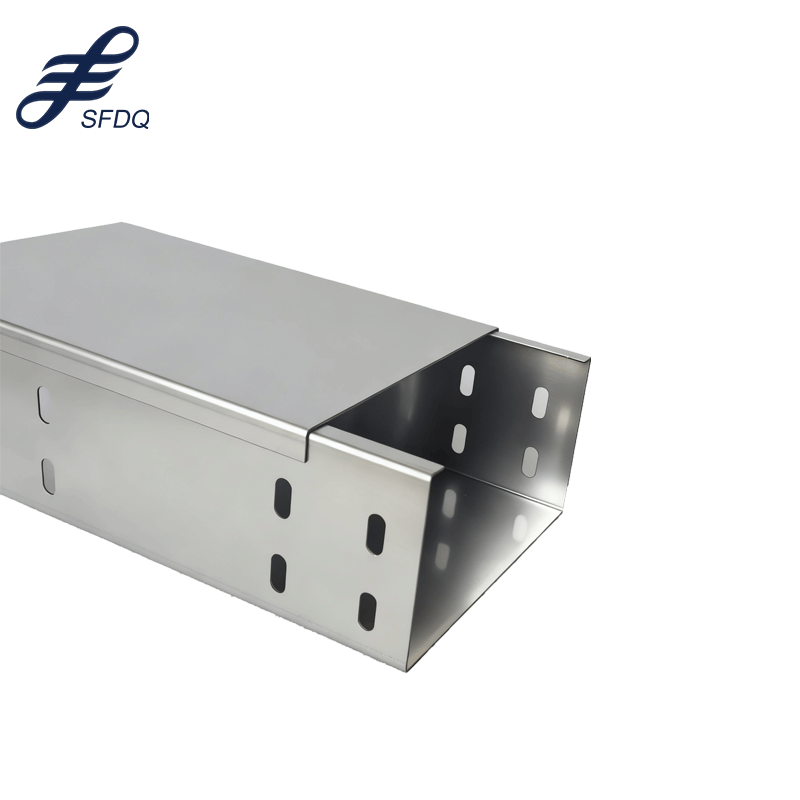
The choice between 304 and 316 stainless steel grades significantly affects the performance and durability of cable tray installations across various industrial environments. While both grades provide excellent corrosion resistance compared to carbon steel alternatives, their chemical compositions create distinct performance characteristics that make each grade suitable for specific applications. Understanding these differences enables engineers and project managers to optimize both initial investment costs and long-term maintenance requirements when selecting a stainless steel cable tray system.
Chemical Composition and Metallurgical Properties
Grade 304 Stainless Steel Composition
Grade 304 stainless steel contains approximately 18-20% chromium and 8-10.5% nickel, making it the most widely used austenitic stainless steel grade in industrial applications. This composition provides excellent general corrosion resistance and maintains structural integrity across a broad temperature range. The chromium content forms a protective oxide layer that prevents oxidation, while the nickel contributes to the steel's ductility and formability characteristics essential for stainless steel cable tray manufacturing processes.
The carbon content in 304 stainless steel typically remains below 0.08%, ensuring good weldability and preventing carbide precipitation that could compromise corrosion resistance. This low carbon content makes 304 stainless steel particularly suitable for fabricating complex cable tray geometries, including perforated designs, ladder configurations, and custom-formed sections. The material's work-hardening characteristics also provide additional strength during the forming processes commonly used in cable tray production.
Manufacturing considerations for 304 stainless steel cable tray systems include its excellent response to standard welding techniques and its ability to maintain consistent mechanical properties after fabrication. The grade's thermal expansion coefficient and conductivity characteristics align well with typical cable management requirements, ensuring dimensional stability across operating temperature ranges encountered in most industrial installations.
Grade 316 Stainless Steel Enhanced Properties
Grade 316 stainless steel incorporates molybdenum at concentrations of 2-3%, distinguishing it from 304 grade through significantly enhanced corrosion resistance properties. This molybdenum addition creates superior resistance to chloride-induced corrosion, making 316 stainless steel cable tray systems particularly valuable in marine environments, chemical processing facilities, and coastal installations where salt spray exposure occurs regularly.
The chromium and nickel content in 316 stainless steel remains similar to 304 grade, typically 16-18% chromium and 10-14% nickel, but the molybdenum addition fundamentally alters the material's electrochemical behavior. This enhanced chemistry provides greater resistance to pitting and crevice corrosion, two failure modes that can compromise cable tray structural integrity in aggressive environments where standard 304 grade might experience localized attack.
From a manufacturing perspective, 316 stainless steel requires slightly modified fabrication techniques due to its increased work-hardening rate and different thermal properties. However, these characteristics actually enhance the final product's strength and durability, making 316 grade stainless steel cable tray installations particularly suitable for demanding applications where long-term reliability justifies the additional material cost.
Corrosion Resistance Performance Comparison
Environmental Suitability Assessment
The corrosion resistance differences between 304 and 316 stainless steel grades become most apparent in specific environmental conditions that challenge the protective oxide layer formation. Grade 304 stainless steel cable tray systems perform excellently in typical indoor industrial environments, office buildings, data centers, and manufacturing facilities where atmospheric conditions remain relatively benign and chloride exposure stays minimal.
Outdoor installations present more complex considerations for stainless steel cable tray selection. While 304 grade handles normal atmospheric exposure adequately in most geographical locations, coastal areas or industrial zones with high pollution levels may accelerate corrosion processes. The presence of road salt, industrial emissions, or marine spray introduces chloride ions that can initiate localized corrosion attack on 304 stainless steel surfaces.
Grade 316 stainless steel demonstrates superior performance in these challenging environments, maintaining its protective characteristics even when exposed to concentrated chloride solutions. This enhanced resistance makes 316 grade stainless steel cable tray systems the preferred choice for petrochemical plants, offshore platforms, wastewater treatment facilities, and pharmaceutical manufacturing environments where aggressive chemical exposure occurs regularly.
Temperature and Chemical Resistance Factors
Temperature variations affect the corrosion resistance of both stainless steel grades, but in different ways that impact cable tray performance over extended service life. Grade 304 maintains excellent corrosion resistance across typical industrial temperature ranges, generally from -196°C to 800°C for continuous service applications. Within normal cable tray operating temperatures, typically -40°C to 85°C, 304 stainless steel provides reliable performance in most atmospheric conditions.
Chemical exposure scenarios require careful evaluation when selecting between 304 and 316 stainless steel cable tray systems. Many industrial facilities experience occasional exposure to cleaning chemicals, process vapors, or maintenance fluids that can affect long-term material performance. Grade 316's molybdenum content provides enhanced resistance to sulfuric acid solutions, organic acids, and various industrial chemicals commonly encountered in processing environments.
The interaction between temperature and chemical exposure creates synergistic effects that can accelerate corrosion processes in 304 stainless steel, while 316 grade maintains better resistance under these combined stress conditions. This performance difference becomes particularly important in applications where cable tray systems experience periodic steam cleaning, chemical washdown procedures, or exposure to process leaks that might compromise standard 304 grade installations over time.
Cost Analysis and Economic Considerations
Initial Investment Comparison
The material cost differential between 304 and 316 stainless steel cable tray systems typically ranges from 20-30% premium for 316 grade, reflecting the additional molybdenum content and more complex manufacturing requirements. This initial cost difference requires careful evaluation against expected service life and maintenance costs to determine the most economical choice for specific applications. Project budgets must account for both material and fabrication costs, as 316 grade may require specialized welding procedures or additional quality control measures.
Installation costs generally remain comparable between 304 and 316 stainless steel cable tray systems, as both grades use similar mounting hardware, support structures, and installation techniques. However, the enhanced corrosion resistance of 316 grade can reduce the need for protective coatings or additional surface treatments that might be required for 304 grade in marginal environmental conditions, potentially offsetting some of the material cost premium.
Procurement considerations should include availability and lead time factors, as 304 stainless steel cable tray components typically maintain better stock availability due to higher production volumes. Specialized configurations or custom fabrications in 316 grade might require extended lead times, potentially affecting project schedules and requiring early procurement planning to avoid construction delays.
Long-term Cost of Ownership
Maintenance requirements significantly differ between 304 and 316 stainless steel cable tray installations, particularly in environments where corrosion factors exist. Grade 304 systems may require periodic inspection and maintenance in marginal environments, including cleaning, surface treatment, or component replacement after 10-15 years of service. These maintenance activities represent ongoing operational costs that should be factored into total cost of ownership calculations.
Grade 316 stainless steel cable tray systems typically demonstrate extended service life with minimal maintenance requirements, even in challenging environments. The reduced need for preventive maintenance, component replacement, and system downtime can provide substantial cost savings over the installation's operational life. Industries with high downtime costs, such as pharmaceutical manufacturing or data centers, often find that 316 grade selection provides favorable return on investment despite higher initial costs.
Lifecycle cost analysis should consider factors such as replacement costs, system availability requirements, and regulatory compliance needs. Facilities operating under strict contamination control requirements may find that 316 grade stainless steel cable tray systems provide better long-term value through reduced maintenance disruption and enhanced system reliability, justifying the premium material cost through operational efficiency gains.
Application-Specific Selection Criteria
Indoor Industrial Applications
Standard indoor industrial environments typically favor 304 stainless steel cable tray systems due to their excellent performance characteristics and cost-effectiveness in controlled atmospheric conditions. Manufacturing facilities, warehouses, distribution centers, and general industrial plants can achieve optimal cable management performance using 304 grade systems when environmental factors remain within normal parameters for temperature, humidity, and atmospheric cleanliness.
Data centers and telecommunications facilities present specific requirements that align well with 304 stainless steel cable tray capabilities. The controlled environment conditions, minimal chemical exposure, and emphasis on electromagnetic compatibility make 304 grade an excellent choice for these applications. The material's non-magnetic properties and excellent electrical characteristics support sensitive electronic equipment installation requirements while maintaining cost-effectiveness.
Food processing facilities require careful consideration of both grades, depending on specific operational requirements. Areas with minimal moisture exposure and standard cleaning procedures can utilize 304 stainless steel cable tray systems effectively, while areas subject to frequent steam cleaning, chemical sanitization, or high-pressure washdown procedures benefit from 316 grade's enhanced chemical resistance properties.
Harsh Environment Applications
Chemical processing industries consistently demonstrate the value of 316 stainless steel cable tray systems through their enhanced performance in aggressive chemical environments. Facilities handling acids, bases, solvents, or salt solutions require the superior corrosion resistance that 316 grade provides. The additional molybdenum content specifically addresses the chloride-induced corrosion that can compromise 304 grade installations in these demanding applications.
Marine and coastal installations represent prime applications for 316 stainless steel cable tray systems. Offshore platforms, shipboard installations, coastal power plants, and waterfront industrial facilities experience constant exposure to salt spray and high humidity conditions that challenge standard 304 grade materials. The investment in 316 grade typically provides superior long-term value in these environments through extended service life and reduced maintenance requirements.
Pharmaceutical and biotechnology facilities often specify 316 stainless steel cable tray systems to meet stringent cleanliness and corrosion resistance requirements. These industries demand materials that can withstand frequent cleaning with aggressive sanitizing agents while maintaining surface integrity and preventing contamination sources. The enhanced chemical resistance of 316 grade supports validation requirements and regulatory compliance in these critical applications.
FAQ
What is the main difference between 304 and 316 stainless steel for cable trays?
The primary difference lies in the molybdenum content, with 316 grade containing 2-3% molybdenum while 304 grade contains none. This molybdenum addition significantly enhances corrosion resistance, particularly against chloride-induced corrosion, making 316 grade superior for harsh environments including marine, coastal, and chemical processing applications. Both grades offer excellent general corrosion resistance, but 316 provides enhanced protection in aggressive environments.
When should I choose 316 over 304 stainless steel cable tray?
Select 316 grade stainless steel cable tray when your installation faces exposure to salt water, coastal environments, chemical processing areas, pharmaceutical facilities, or any location with regular chloride exposure. Additionally, choose 316 grade for applications requiring frequent chemical cleaning, steam sterilization, or exposure to acids and aggressive industrial chemicals. The higher initial cost is typically justified by extended service life and reduced maintenance requirements in these demanding environments.
Can 304 stainless steel cable trays be used outdoors?
Yes, 304 stainless steel cable trays can be used outdoors in many applications, particularly in inland areas with normal atmospheric conditions. However, coastal locations, industrial areas with high pollution levels, or regions with road salt exposure may require 316 grade for optimal long-term performance. Consider local environmental factors, maintenance requirements, and expected service life when making this decision for outdoor installations.
How much more expensive is 316 compared to 304 stainless steel cable tray?
The material cost premium for 316 grade stainless steel cable tray typically ranges from 20-30% over 304 grade, depending on market conditions and specific configurations. However, this initial cost difference should be evaluated against total cost of ownership, including maintenance requirements, expected service life, and potential downtime costs. In many demanding applications, the enhanced durability and reduced maintenance needs of 316 grade provide favorable long-term economics despite the higher upfront investment.