 EN
EN


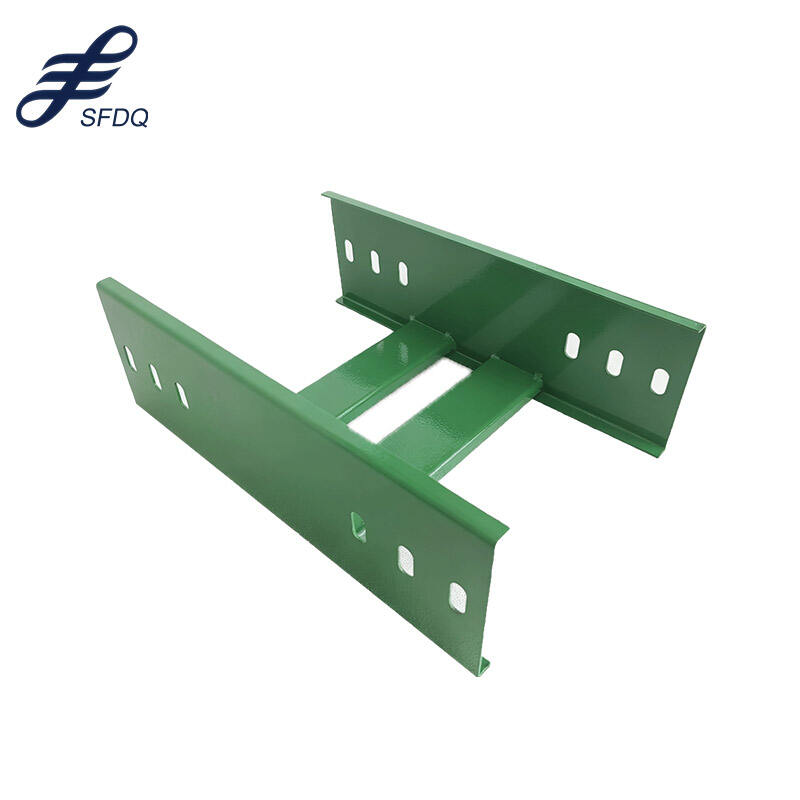
Understanding what is cable tray is fundamental for anyone involved in electrical installation, facility management, or industrial construction. A cable tray is a rigid, prefabricated structural system designed to support and route electrical cables, power wiring, and communication lines throughout a building or industrial facility. Rather than leaving cables loosely bundled or buried inside conduits, a cable tray provides a continuous, open, and accessible pathway that keeps wiring organized, protected, and easy to maintain. As modern facilities grow more complex and power-intensive, knowing what is cable tray and how it functions becomes an essential part of electrical infrastructure planning.

The purpose of a cable tray system extends well beyond simple cable containment. These systems serve as the structural backbone of an electrical layout, enabling engineers and installers to manage large volumes of cables with precision, safety, and long-term flexibility. Whether deployed in data centers, manufacturing plants, commercial buildings, or utility infrastructure, cable tray systems play a critical role in maintaining operational reliability and code compliance. This article explains what is cable tray in detail, covering its core components, types, installation logic, and the practical value it delivers across different industry environments.
The Core Definition and Components of a Cable Tray System
Defining What a Cable Tray Is
At its most basic level, what is cable tray refers to a fabricated channel or open framework that carries and organizes electrical cables along a defined route within a facility. Unlike enclosed conduits that require cables to be pulled through a sealed pipe, a cable tray is typically open or semi-enclosed, making it easy to add, remove, or inspect cables without major disruption to the existing installation. This openness is one of the defining functional advantages of cable tray systems and explains why they are preferred in environments with high cable density.
Cable trays are manufactured from a variety of materials, including steel, aluminum, stainless steel, and fiberglass. Each material offers distinct advantages depending on the environment. For example, stainless steel and fiberglass cable trays are preferred in corrosive or chemically active environments, while hot-dip galvanized or pre-galvanized steel trays are widely used in general industrial and commercial settings due to their cost-effectiveness and mechanical strength. The choice of material is a key decision when specifying what is cable tray for a particular application.
The structural design of a cable tray includes side rails, which form the outer longitudinal edges of the tray, and either rungs or a solid or perforated base that supports the cables from below. Rungs allow for better airflow around cables, which is critical for power cables that generate heat during operation. A solid-bottom tray provides additional protection and is better suited for fragile or sensitive signal cables. Understanding these structural elements is part of understanding what is cable tray as a complete system rather than just a single product.
Key Components That Make Up a Complete Cable Tray System
A complete cable tray system is not just a single length of tray. It includes a range of fittings and accessories that allow the system to navigate the physical constraints of a facility. Horizontal bends, vertical bends, tees, cross-pieces, and reducers all work together to route the cable tray around obstacles, through floors, and between sections of a building. These fittings are engineered to maintain the same load capacity and structural integrity as the straight sections.
Support hardware is another essential component. Cable trays are hung from ceilings or mounted to walls and structural beams using hangers, brackets, and trapeze supports. The spacing of these supports is calculated based on the load weight of the cables and the structural properties of the tray itself. Proper support design ensures the tray does not deflect excessively under load, which could cause cable damage or create a safety hazard. When evaluating what is cable tray from a system perspective, the hardware and support structure is just as important as the tray body itself.
Grounding and bonding accessories are also integral to a properly installed cable tray system. Since the tray itself is metallic and runs continuously through a facility, it must be bonded to the facility's ground system to prevent electrical hazards. Grounding clamps, bonding jumpers, and ground lugs are specified as part of the cable tray system to ensure electrical continuity throughout the installation. This is a safety requirement that any electrician or engineer must understand when considering what is cable tray and how it is installed correctly.
Common Types of Cable Trays and Their Specific Applications
Ladder-Type Cable Tray
The ladder-type cable tray is one of the most widely recognized and commonly installed configurations. Its design features two parallel side rails connected by evenly spaced rungs, closely resembling the appearance of a horizontal ladder. This open structure allows for maximum airflow around cables, which makes it the preferred choice for power distribution cables in industrial plants, offshore platforms, and heavy manufacturing environments. The ladder tray can carry heavy cable loads while ensuring that heat generated by high-current cables can dissipate efficiently.
The rung spacing in a ladder-type cable tray is an important specification. Standard rung spacings typically range from 150mm to 300mm, depending on the diameter and stiffness of the cables being supported. When cables are larger in diameter or more rigid, a wider rung spacing may be acceptable. For smaller or more flexible cables, a tighter rung spacing is needed to prevent sagging between supports. Knowing how rung spacing impacts cable support is a practical element of understanding what is cable tray for industrial applications.
Solid-Bottom and Perforated Cable Tray
Solid-bottom cable trays have a continuous base surface without openings. This design provides full support along the entire length of the cable and offers protection from falling objects, liquids, or contaminants. Solid-bottom trays are commonly used in commercial buildings for routing communication cables, fiber optic lines, and sensitive instrumentation wiring where physical protection and electromagnetic shielding are priorities. The enclosed underside also gives a cleaner aesthetic appearance, which matters in office environments or public-facing installations.
Perforated cable trays offer a compromise between the openness of a ladder tray and the protection of a solid-bottom tray. The perforations allow for partial airflow while still providing a continuous base that prevents small cables from falling through the gaps. This type is often specified in commercial and light industrial environments where a mix of cable types needs to be routed together. Understanding the difference between solid-bottom, perforated, and ladder-style trays is central to fully grasping what is cable tray as a product category with diverse configurations.
Wire Mesh and Channel Cable Tray
Wire mesh cable trays, sometimes called wire basket trays, are made from welded wire grids rather than stamped or rolled sheet metal. They are lightweight, highly flexible, and extremely easy to cut and reshape in the field, making them popular in data centers and office environments where cable routes frequently change. Wire mesh trays are also used for overhead cable management in server rooms, where flexibility and quick installation are valued. This form of tray is a distinct part of the broader answer to what is cable tray and demonstrates the range of designs available to engineers.
Channel cable trays, also known as single-rail trays, are narrow trough-shaped profiles used for routing small numbers of cables in tight or restricted spaces. They are ideal for branch runs that carry only a few cables away from a main trunk tray. Channel trays are cost-effective and easy to install, making them a practical solution for secondary routing paths. When specifying a cable tray system, engineers often combine multiple tray types — using ladder trays for main runs and channel trays for branch circuits — to optimize both cost and performance.
Why Cable Tray Systems Are Preferred Over Conduit in Many Applications
Flexibility and Scalability for Growing Facilities
One of the most significant reasons facilities choose cable tray over enclosed conduit is flexibility. With a conduit system, adding a new cable requires pulling it through a sealed tube, which may involve rerouting, cutting into walls, or installing additional conduit sections. A cable tray, by contrast, allows new cables to be laid directly into the open tray at any time. This capacity for easy modification is especially valuable in manufacturing plants where production layouts change frequently or in data centers where IT infrastructure evolves rapidly. Understanding what is cable tray from an operational perspective means recognizing this long-term flexibility as a core advantage.
Scalability is closely related to flexibility. A cable tray system can be designed with additional load capacity built in from the beginning, leaving room for cables that will be added as the facility grows. This foresight eliminates the need for costly retrofits later. The open design of the tray makes it easy to visually assess how much capacity remains, which simplifies facility planning and helps avoid overcrowding cables — a common fire risk in densely packed conduit systems. The scalability of cable tray systems directly supports the long-term operational goals of industrial and commercial facilities.
Maintenance Access and Reduced Installation Labor
Maintenance teams consistently cite cable tray accessibility as one of the most practical advantages of this type of installation. Because the cables lie openly in the tray, technicians can visually inspect wiring, identify damaged insulation, trace circuits, and replace cables without dismantling any structure. This visibility dramatically reduces troubleshooting time and minimizes facility downtime during repairs or upgrades. For facilities where uptime is measured in significant financial terms — such as process plants or data centers — this maintenance advantage directly contributes to cost savings.
Installation labor is also typically lower with a cable tray system compared to a fully enclosed conduit network of equivalent size. Conduit installation requires precise measurement, threading, bending, and sealing of each individual pipe segment. Cable tray sections are standardized, bolt together quickly, and allow cables to simply be laid in place rather than pulled through a restricted tube. For large-scale industrial projects where electrical installation represents a significant portion of total project cost, the labor savings from using a what is cable tray system can be substantial and measurable from the earliest project planning stages.
Industry Applications and Environments Where Cable Tray Systems Excel
Industrial and Manufacturing Environments
Industrial facilities represent the most demanding environment for cable management. Heavy machinery, high-voltage power feeds, motor control wiring, instrumentation cables, and communication lines all coexist in the same facility and must be routed safely and efficiently. Cable tray systems are ideally suited for these environments because they can carry the heavy loads of large power cables while keeping different cable categories separated — for example, keeping high-voltage power cables on one side of the tray and sensitive signal cables on the other to minimize electromagnetic interference.
In petrochemical plants, offshore oil platforms, and similar hazardous locations, the choice of cable tray material is critical. Fiberglass-reinforced plastic cable trays are often specified in these settings because they resist corrosion, do not conduct electricity, and are inherently flame-retardant. The ability to choose what is cable tray material based on environmental conditions demonstrates the adaptability of the cable tray system concept across the widest range of industrial settings. Pre-galvanized steel trays, on the other hand, offer excellent performance in standard indoor industrial environments at a competitive cost point.
Commercial Buildings and Data Centers
In commercial buildings, cable tray systems are used to manage the complex web of power distribution, fire alarm wiring, building automation cables, and network infrastructure that modern buildings require. Architects and electrical engineers increasingly specify cable tray above suspended ceilings or within raised-floor systems as a clean, organized alternative to chaotic cable bundles. The visual neatness of a properly installed cable tray system also makes inspections by building code officials faster and more straightforward, which can accelerate project approvals.
Data centers represent one of the highest-density cable management environments in the modern built world. With thousands of network cables, power feeds, and fiber optic connections running between server racks and distribution panels, a structured cable tray system is essential. Wire mesh trays are especially popular in data centers due to their light weight, airflow properties, and ease of field modification. Every data center engineer who understands what is cable tray in its many forms recognizes it as the foundation of a well-organized and scalable data infrastructure.
FAQ
What is cable tray used for in electrical installations?
A cable tray is used to support, organize, and route electrical cables — including power wiring, data cables, and control lines — throughout a building or facility. It provides a structured pathway that keeps cables secure, accessible, and separated by function or voltage level, which improves both safety and long-term maintainability of the electrical system.
What is the difference between a cable tray and a conduit?
A cable tray is an open or semi-enclosed structural support system where cables lie in an accessible channel, while a conduit is an enclosed pipe through which cables are pulled. Cable trays allow easier access, faster installation, and simpler future modifications, while conduits offer greater physical protection and are preferred in areas where cables are exposed to direct mechanical impact or outdoor elements.
What materials are cable trays made from and how do I choose the right one?
Cable trays are manufactured from pre-galvanized steel, hot-dip galvanized steel, aluminum, stainless steel, and fiberglass-reinforced plastic. The right material depends on the installation environment. Steel is widely used in standard industrial and commercial settings. Stainless steel and fiberglass are specified for corrosive or chemically active environments. Aluminum offers a lightweight option where weight reduction is important. Evaluating the specific environmental conditions of the installation site is the key first step in material selection.
What is cable tray capacity and how is it determined?
Cable tray capacity refers to the maximum weight of cables the tray can safely support between mounting brackets without excessive deflection. It is determined by the tray material, cross-sectional dimensions, rung or base design, and the spacing of support brackets. Engineers calculate the total weight of cables planned for a given section of tray and select a tray specification whose rated load capacity meets or exceeds that requirement, with an appropriate safety factor built in.