 EN
EN



If you have ever worked on a commercial construction project, an industrial facility, or even a large data center, you have likely encountered the question: what is cable tray and why does it matter so much to engineers and facility managers? A cable tray is a rigid, prefabricated structural system designed to support and route electrical cables, data cables, and communication wiring throughout a building or industrial installation. Unlike conduit systems that enclose cables within sealed pipes, cable trays provide an open or semi-open pathway that keeps wiring organized, accessible, and protected — all at the same time. Understanding the purpose and application of cable trays is essential for anyone involved in electrical planning, infrastructure design, or facility management.
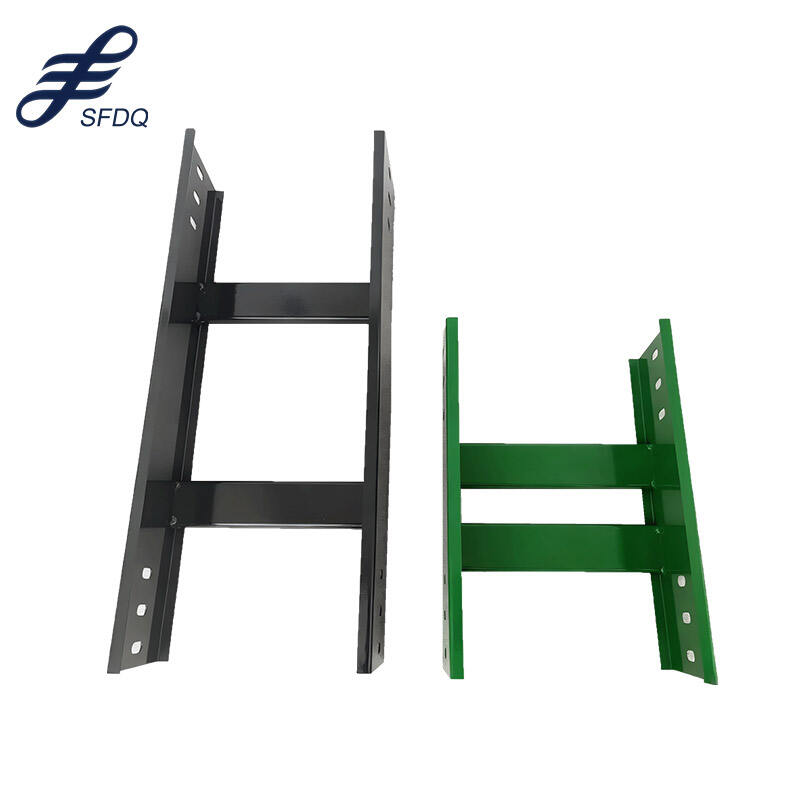
The concept behind what is cable tray extends far beyond simple wire containment. These systems are a cornerstone of modern electrical infrastructure, enabling safe, scalable, and cost-effective cable management across industries ranging from oil and gas to healthcare, manufacturing, and telecommunications. In this article, we will explore in depth what cable trays are used for, how they function across different environments, what types exist, and what makes them a preferred choice over alternative wiring methods. Whether you are specifying a new installation or evaluating an upgrade, this guide will give you the practical understanding you need to make informed decisions.
The Core Purpose of a Cable Tray in Electrical Infrastructure
Organizing and Supporting Cables at Scale
At its most fundamental level, understanding what is cable tray starts with its primary function: physical support. Cables cannot simply hang in the air or lie on the ground — they need a robust structural pathway that holds them securely over long distances. Cable trays fulfill this need by providing a rigid framework, typically made of steel, aluminum, or fiberglass, that spans between supports and carries the combined weight of dozens or even hundreds of cables simultaneously.
In large industrial plants or commercial buildings, the quantity of cables running through a facility can be staggering. Power feeds, control circuits, instrumentation cables, fiber optic lines, and data cables all need dedicated routing paths. A cable tray system allows these different cable types to be segregated and routed cleanly along ceilings, walls, and structural beams without creating hazardous tangles or fire risks. The result is a well-organized wiring infrastructure that is easier to inspect, maintain, and expand over time.
The structural design of a cable tray also plays a significant role. Ladder-type trays use two longitudinal rails connected by rungs — much like a ladder — to offer maximum ventilation and load-bearing capacity. Solid-bottom trays provide full coverage underneath cables, making them suitable for environments where debris or liquids might be present. Perforated bottom trays offer a middle ground, combining partial support with ventilation. Each variant is engineered to serve a specific set of installation conditions.
Protecting Cables from Environmental Hazards
Another critical application tied to what is cable tray is environmental protection. In industrial environments, cables are exposed to mechanical stress, chemical exposure, UV radiation, extreme temperatures, and moisture. A properly specified cable tray acts as a physical barrier between these hazards and the cables running inside it, significantly extending the service life of the wiring and reducing the risk of electrical faults.
In outdoor or harsh environments, galvanized steel or hot-dip galvanized cable trays provide corrosion resistance that protects both the tray structure and the cables it contains. In chemical processing plants, fiberglass-reinforced plastic trays are used to resist acid and alkali exposure that would rapidly degrade metallic systems. Even in clean indoor settings, cable trays prevent cables from being crushed underfoot or damaged by moving equipment — a common cause of electrical failures in busy manufacturing environments.
The protection function of cable trays also extends to fire safety. By keeping cables elevated and separated from combustible materials, and by allowing proper airflow around heat-generating cables, cable trays contribute to passive fire management in a facility. Many tray systems are designed and tested to meet fire resistance standards, giving engineers and safety officers confidence that the wiring infrastructure will perform reliably even under stress.
Industrial and Commercial Applications of Cable Trays
Use in Manufacturing and Heavy Industry
When examining what is cable tray used for in heavy industry, the answer involves both complexity and scale. Manufacturing plants, refineries, power generation facilities, and mining operations depend on enormous quantities of electrical and control cabling. These environments require wiring systems that can handle high cable loads, resist corrosion, and remain accessible for frequent maintenance and modification.
In a typical industrial plant, cable trays form the backbone of the electrical distribution network. Power cables feeding motors, variable frequency drives, and switchgear run alongside instrumentation and control cables connecting sensors, PLCs, and SCADA systems. Cable trays allow these different categories to be routed in parallel while maintaining the required separation distances to prevent electromagnetic interference. The open design of ladder trays also makes it straightforward to add or remove cables as production lines are reconfigured — a major operational advantage in dynamic manufacturing environments.
Heavy-duty cable trays used in these settings are often rated to carry thousands of kilograms per meter span, and they are engineered to maintain their structural integrity even under thermal cycling, vibration, and seismic loads. This combination of strength and adaptability makes the cable tray an indispensable component of industrial electrical infrastructure globally.
Applications in Commercial Buildings and Data Centers
The question of what is cable tray used for is equally relevant in commercial real estate and technology infrastructure. In high-rise office buildings, shopping centers, hospitals, and airports, cable trays are used to route power distribution cables, fire alarm wiring, building management system cables, and structured data cabling throughout multiple floors and mechanical spaces.
Data centers present a particularly demanding application environment. The density of power and data cables in a modern data center is extraordinary, and managing this density requires disciplined cable tray planning. Overhead cable tray systems route power feeds from UPS units and PDUs to server racks, while under-floor trays handle structured cabling for data connectivity. The modularity of cable tray systems allows data center operators to reconfigure layouts quickly as equipment needs change — an essential feature in an industry where infrastructure must evolve rapidly.
In healthcare facilities, cable trays support critical wiring for medical imaging equipment, life support systems, and hospital-wide communications networks. The reliability and accessibility offered by properly installed what is cable tray systems directly supports the uninterrupted operation of medical services — where downtime can have life-threatening consequences.
Types of Cable Trays and Their Specific Uses
Ladder Cable Trays
The ladder cable tray is arguably the most widely used design in industrial and commercial installations, and understanding it is central to answering what is cable tray across multiple contexts. Its open rung design allows maximum air circulation around cables, which is critical for heat dissipation in circuits carrying high current loads. This design also minimizes the accumulation of dust and debris, reducing maintenance requirements in dusty industrial environments.
Ladder trays are available in a wide range of widths, depths, and load ratings, making them highly adaptable to different project requirements. They are commonly used for power cables in industrial plants, outdoor overhead routing in petrochemical facilities, and large power distribution runs in commercial buildings. Their robust construction allows for long spans between support points, reducing the number of hangers or supports needed and lowering overall installation costs.
Solid Bottom and Perforated Trays
Solid bottom cable trays are used when cables need to be shielded from below — for example, in areas where fluids might drip from above, or where electromagnetic shielding is a concern. These trays fully enclose the underside of the cable bundle, providing additional mechanical protection and reducing the risk of accidental contact. They are often specified for sensitive instrumentation cables or for environments with exposure to liquid contaminants.
Perforated bottom trays combine the benefits of partial enclosure with improved ventilation. The perforations allow some airflow while still providing more support and protection than an open ladder tray. This type is commonly used in commercial buildings for structured data cabling, where the cables are lighter and the environment is relatively clean. Understanding these distinctions is part of the broader answer to what is cable tray technology and how it is matched to specific installation needs.
Wire mesh cable trays, also known as basket trays, are a lightweight variant popular in data centers and office environments. They consist of a welded wire mesh basket that supports cables while offering maximum flexibility for routing changes. Their low weight and ease of installation make them attractive for applications where the cable load is manageable and frequent reconfiguration is expected.
Advantages of Cable Tray Systems Over Conduit
Cost Efficiency and Installation Speed
One of the most compelling reasons to understand what is cable tray from an engineering and procurement perspective is the significant cost advantage it offers over traditional conduit systems. Conduit installation requires threading, bending, and connecting individual pipes to create enclosed pathways — a labor-intensive process that drives up installation costs substantially. Cable tray systems, by contrast, are modular and straightforward to assemble, allowing faster installation with fewer skilled labor hours.
Material costs are also generally lower for cable tray systems, particularly in applications with large cable volumes. Running many cables through a single tray is far more economical than providing individual conduit runs for each cable group. For projects with tight budgets or aggressive construction schedules, the speed and simplicity of cable tray installation can represent a decisive advantage that directly impacts project profitability.
Scalability and Future-Proofing
Another dimension of what is cable tray valued by facility managers is scalability. Unlike conduit systems, which are essentially fixed once installed, cable trays can be expanded, rerouted, and reconfigured without major structural changes. Adding new cables to an existing tray is straightforward — installers simply lay the new cables alongside the existing ones, provided the tray has remaining capacity. This flexibility makes cable trays the preferred infrastructure choice in environments where growth and change are expected.
The ability to future-proof a facility's electrical infrastructure is particularly valuable in industries experiencing rapid technological change, such as manufacturing automation and telecommunications. As new equipment is added, as production lines are reconfigured, or as data bandwidth requirements increase, a cable tray system can accommodate these changes without requiring complete rewiring of existing infrastructure. This adaptability substantially reduces the total cost of ownership over a facility's lifetime.
Maintenance access is another scalability benefit tied to understanding what is cable tray. Because cables in a tray are visible and accessible, fault identification and cable replacement are far easier than in enclosed conduit systems. Maintenance teams can visually inspect cables for damage, trace specific circuits quickly, and make repairs without dismantling the entire routing system. This accessibility translates directly into reduced downtime and lower maintenance costs over the operational life of the facility.
FAQ
What is cable tray and how does it differ from conduit?
A cable tray is an open or semi-open structural support system for routing multiple cables along a defined path, while a conduit is an enclosed pipe through which individual cables or small cable groups are threaded. The key difference lies in accessibility and scalability — cable trays allow cables to be added, inspected, or replaced without dismantling the system, whereas conduit requires pulling cables through a sealed pipe. Cable trays are generally more cost-effective for large cable volumes, while conduit offers better physical protection in high-risk or outdoor exposed environments.
What materials are cable trays typically made from?
Cable trays are manufactured in a variety of materials depending on the application environment. Steel — either hot-dip galvanized or pre-galvanized — is the most common choice for general industrial and commercial use due to its strength and cost-effectiveness. Aluminum trays are used where weight reduction is important, such as in data centers or where long unsupported spans are required. Fiberglass-reinforced plastic trays are specified for highly corrosive environments such as chemical processing plants, offshore platforms, and wastewater treatment facilities where metallic trays would degrade rapidly.
What types of cables can be placed in a cable tray?
Cable trays can accommodate a wide range of cable types, including power cables, control cables, instrumentation cables, fiber optic cables, data and communication cables, and fire alarm wiring. However, different cable categories are typically segregated within the tray system to prevent electromagnetic interference and to comply with electrical codes and standards. Many installations use dividers or separate tray sections to keep power and signal cables at appropriate separation distances.
Is a cable tray suitable for outdoor installations?
Yes, cable trays are widely used in outdoor installations, including rooftops, outdoor switchyards, petrochemical plant pipe racks, and overhead cable bridges between buildings. For outdoor use, the tray material and finish must be selected to withstand UV exposure, temperature fluctuations, moisture, and — in coastal or industrial areas — chemical corrosion. Hot-dip galvanized steel, aluminum, and fiberglass trays are all common choices for outdoor applications, and covers can be added to ladder or perforated trays to provide additional protection from rain, sunlight, and debris accumulation.