 EN
EN


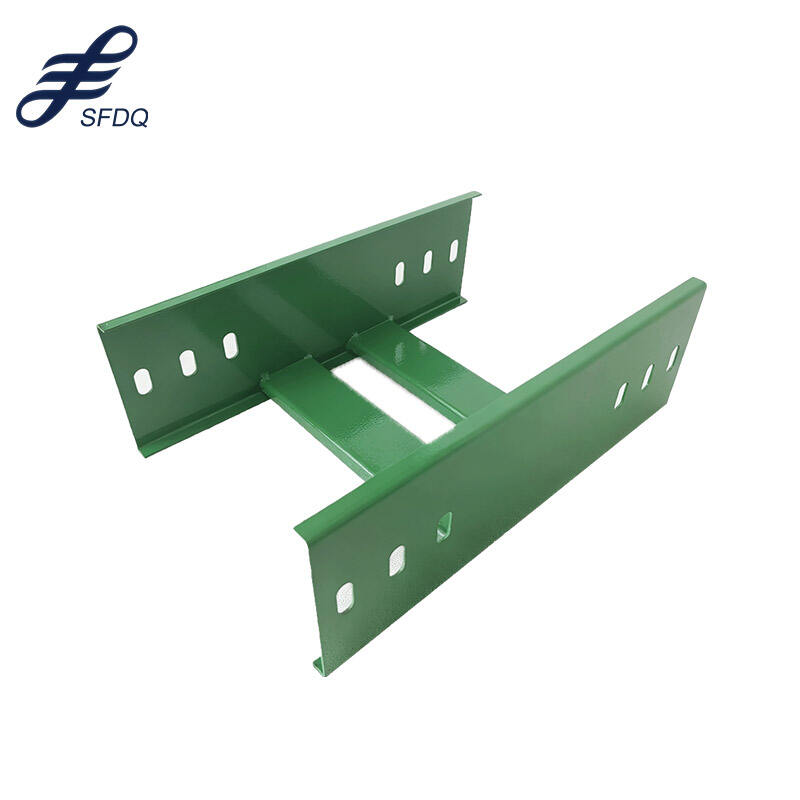
If you have ever walked through an industrial facility, a commercial building, or a data center and noticed organized bundles of electrical cables running overhead or along walls, you have already seen cable management in action. Understanding what is cable tray is essential for engineers, facility managers, and procurement professionals who need reliable, scalable, and code-compliant solutions for routing electrical conductors. A cable tray is a rigid structural system designed to support and route insulated electrical cables used for power distribution, control systems, and communications — and it plays a foundational role in modern electrical infrastructure.

To fully grasp what is cable tray and how it functions within a building or industrial plant, it helps to look at both its physical construction and its operational logic. Unlike conduit systems that enclose cables inside a pipe, a cable tray is an open or semi-open framework that holds cables in place while allowing heat dissipation, easy inspection, and straightforward modification. This article breaks down the definition, types, working principles, installation considerations, and practical applications of cable tray systems so you can make informed decisions for your next project.
Defining Cable Tray in Electrical Engineering
The Core Definition and Purpose
At its most fundamental level, what is cable tray can be answered simply: it is a prefabricated, rigid structural system used to mechanically support cables in a building or industrial installation. The system typically consists of a series of connected sections — straight runs, bends, tees, and crosses — that form a continuous pathway from one point to another. Cables are laid inside the tray rather than pulled through a conduit, which makes installation faster and future modifications far more practical.
The purpose of a cable tray goes beyond mere physical support. It organizes cables to prevent tangling, reduces the risk of mechanical damage, and ensures that cables are routed in a way that meets electrical codes and safety standards. In large facilities where hundreds or even thousands of cables must be managed, a well-designed cable tray system is not optional — it is a critical infrastructure component that directly affects operational reliability and maintenance efficiency.
When professionals ask what is cable tray in the context of compliance, the answer also includes its role in meeting standards such as the National Electrical Code (NEC), IEC guidelines, and various regional building codes. These standards define how cable trays must be installed, grounded, and loaded to ensure safety and performance over the long term.
Key Components That Make Up a Cable Tray System
A complete cable tray system is made up of several interconnected components. The main structural element is the tray section itself, which can be a ladder-style frame, a solid-bottom channel, a wire mesh basket, or a ventilated trough. Supporting these sections are hangers, brackets, and trapeze assemblies that attach to ceilings, walls, or structural steel. Fittings such as horizontal elbows, vertical bends, reducers, and tee sections allow the tray to navigate around obstacles and change direction throughout a facility.
Splice plates and bolted connectors join individual tray sections together to form a continuous run, while covers can be added to protect cables from dust, moisture, or physical impact in certain environments. Grounding hardware ensures the entire metallic tray system is properly bonded to the facility's electrical ground, which is a safety requirement in most jurisdictions. Understanding these components is part of understanding what is cable tray as a complete engineered system rather than just a simple shelf for cables.
How Cable Tray Works as a Cable Management System
The Mechanical Support and Routing Function
The working principle of a cable tray is straightforward but highly effective. Cables are laid into the tray and secured at intervals using cable ties, clamps, or cleats. The tray itself is suspended or mounted at a height that keeps cables away from foot traffic, machinery, and other hazards. Because the tray forms a continuous, rigid pathway, cables are supported along their entire length, which prevents sagging, bending stress, and the kind of mechanical fatigue that can degrade insulation over time.
One of the most important aspects of how what is cable tray translates into practical performance is the concept of fill capacity. Each tray has a rated load capacity and a maximum cable fill area, which determines how many cables of a given size can be safely installed. Proper fill management ensures that cables do not overheat due to excessive bundling and that the tray structure is not overloaded. Engineers calculate fill ratios during the design phase to ensure the system performs safely under full operational load.
The open or semi-open design of most cable trays also plays a functional role. Unlike enclosed conduit, a cable tray allows ambient air to circulate around the cables, which helps dissipate heat generated by current-carrying conductors. This thermal management function is especially important in high-current power distribution applications where heat buildup can reduce cable ampacity and shorten service life.
Electrical Continuity and Grounding
Beyond mechanical support, a metallic cable tray system also serves an electrical function. When properly bonded and grounded, the tray acts as an equipment grounding conductor, providing a low-impedance fault current path back to the source. This is a critical safety feature because it ensures that in the event of an insulation failure or short circuit, fault current is quickly conducted away and the protective device — a breaker or fuse — operates to clear the fault before anyone is harmed.
The grounding continuity of a cable tray system depends on the quality of the splice connections between sections. Loose or corroded splice plates can interrupt the grounding path, which is why installation standards require that connections be made with hardware rated for grounding continuity. This is another dimension of what is cable tray that goes beyond simple cable organization — it is an active participant in the facility's electrical safety system.
Types of Cable Tray and Their Specific Applications
Ladder Cable Tray
The ladder cable tray is the most widely recognized type and the one most people picture when they first ask what is cable tray. It consists of two longitudinal side rails connected by rungs at regular intervals, resembling a ladder laid flat. This design provides excellent ventilation and is ideal for large-diameter power cables that generate significant heat. The open rung design also makes it easy to add or remove cables without disturbing the entire installation.
Ladder trays are commonly used in industrial plants, refineries, power generation facilities, and heavy manufacturing environments where robust support and high cable loads are the norm. They are available in a wide range of widths and depths to accommodate everything from a handful of control cables to dozens of large power conductors running in parallel. The what is cable tray question is most often answered with a ladder tray example because of how visually intuitive and mechanically straightforward this type is.
Solid Bottom and Ventilated Trough Trays
Solid bottom cable trays provide a continuous, unperforated base that fully supports cables along their length. This type is preferred for smaller instrumentation cables, fiber optic cables, and communication wiring where the cables are more delicate and benefit from continuous support rather than point support at rungs. The solid bottom also provides some protection against falling debris, making it suitable for environments where overhead contamination is a concern.
Ventilated trough trays are a middle ground between the ladder and solid bottom designs. They have a bottom with slots or perforations that allow some airflow while still providing more support than a ladder tray. This makes them suitable for medium-sized cables in environments where both support and ventilation are needed. Understanding these distinctions is part of answering what is cable tray in a way that is actually useful for project specification and procurement decisions.
Wire Mesh Cable Tray
Wire mesh cable trays, sometimes called basket trays, are made from welded wire grids and are particularly popular in data centers, telecommunications rooms, and commercial office buildings. Their lightweight construction makes them easy to handle and install, and their open mesh design provides maximum ventilation for data and communication cables. Wire mesh trays can be cut and shaped on-site with basic tools, which makes them highly adaptable to complex routing requirements.
The flexibility and ease of modification that wire mesh trays offer is one reason they have become a standard answer to what is cable tray in the IT and telecommunications sector. They can be quickly reconfigured as network infrastructure changes, which is a significant advantage in environments where cable layouts evolve frequently.
Material Selection and Environmental Considerations
Steel, Aluminum, and Stainless Steel Options
Cable trays are manufactured from several different materials, and the choice of material directly affects performance, longevity, and cost. Hot-dip galvanized steel is the most common material for industrial applications because it offers high strength, good corrosion resistance, and relatively low cost. It is suitable for most indoor and sheltered outdoor environments where moderate corrosion exposure is expected.
Aluminum cable trays are lighter than steel, naturally corrosion-resistant, and non-magnetic, making them a good choice for coastal environments, chemical plants, and applications where weight is a concern. Stainless steel trays offer the highest level of corrosion resistance and are used in food processing, pharmaceutical manufacturing, and other industries where hygiene and chemical exposure are critical factors. When evaluating what is cable tray for a specific project, material selection is one of the first decisions that must be made based on the operating environment.
Fiberglass and Non-Metallic Trays
In highly corrosive environments such as wastewater treatment plants, chemical processing facilities, and offshore platforms, fiberglass reinforced plastic (FRP) cable trays offer a compelling alternative to metal. FRP trays are immune to rust and most chemical attack, are electrically non-conductive, and have a long service life even in harsh conditions. Their non-conductive nature means they do not contribute to the grounding system, which must be addressed separately in the electrical design.
Understanding what is cable tray in terms of material options allows engineers and procurement teams to specify the right product for the right environment rather than defaulting to a single material for all applications. The correct material choice reduces maintenance costs, extends service life, and ensures that the cable management system performs reliably throughout the facility's operational lifespan.
Installation Principles and Best Practices
Planning the Cable Tray Route
Effective cable tray installation begins with careful route planning. Engineers must consider the physical path the tray will follow, the structural supports available for mounting, the types and quantities of cables to be installed, and the need for future expansion. A well-planned route minimizes the number of fittings required, reduces installation time, and makes future cable additions straightforward. Understanding what is cable tray at the planning stage means recognizing it as a long-term infrastructure investment rather than a temporary solution.
Separation of cable types is another critical planning consideration. Power cables and signal or communication cables should generally be routed in separate trays or separated by dividers within the same tray to prevent electromagnetic interference. This separation is not just a best practice — it is often a code requirement that must be addressed during the design phase.
Mounting, Spacing, and Load Management
The structural integrity of a cable tray installation depends on proper support spacing. Supports must be placed at intervals that keep deflection within acceptable limits under the full design cable load. Most manufacturers provide load tables that specify the maximum span between supports for each tray size and material, and these tables must be followed to ensure the installation meets both structural and code requirements.
Cable fill management during installation is equally important. Installers must track the cumulative cross-sectional area of cables being placed in the tray and ensure it does not exceed the rated fill capacity. Overloaded trays not only risk structural failure but can also cause cables to overheat, which is a fire hazard and a reliability risk. Proper installation practice is a key part of understanding what is cable tray as a system that must be engineered and installed with discipline, not just assembled quickly.
Labeling and documentation are the final elements of a professional cable tray installation. Each tray section and cable run should be clearly labeled to facilitate maintenance, troubleshooting, and future modifications. Good documentation reduces the time and cost of every subsequent intervention in the cable management system and is a hallmark of facilities that take what is cable tray seriously as a managed infrastructure asset.
FAQ
What is cable tray used for in industrial settings?
In industrial settings, what is cable tray refers to a structural support system used to route and organize power cables, control cables, and instrumentation wiring throughout a facility. It keeps cables off the floor, protects them from mechanical damage, allows heat dissipation, and makes it easy to add or modify cables as production needs change. Industries such as oil and gas, manufacturing, power generation, and chemical processing rely heavily on cable tray systems for their electrical infrastructure.
What is the difference between cable tray and conduit?
The key difference is that conduit fully encloses cables inside a pipe, while a cable tray is an open or semi-open framework that supports cables without enclosing them. Conduit offers more physical protection and is preferred for exposed locations or where cables must be protected from liquids and physical impact. Cable tray is preferred for large cable volumes, high-heat applications, and situations where future cable additions are anticipated, because it is much easier to access and modify than a conduit system.
How do I choose the right type of cable tray for my project?
Choosing the right type depends on several factors: the size and type of cables being supported, the environmental conditions (indoor, outdoor, corrosive, or clean), the required load capacity, and the need for ventilation. Ladder trays suit heavy power cables in industrial environments, solid bottom trays suit delicate instrumentation and fiber optic cables, wire mesh trays suit data centers and commercial buildings, and FRP trays suit highly corrosive environments. Consulting the manufacturer's load tables and relevant electrical codes is essential for making the right specification decision.
Does a cable tray need to be grounded?
Yes, metallic cable tray systems must be grounded in accordance with applicable electrical codes such as the NEC or IEC standards. Proper grounding ensures that the tray provides a reliable fault current path, which is essential for the safe operation of overcurrent protective devices. Grounding is achieved through bonding jumpers at splice connections and a connection to the facility's grounding electrode system. Non-metallic trays such as FRP do not require grounding but also do not contribute to the grounding system, so alternative grounding provisions must be made for the cables they support.