 EN
EN


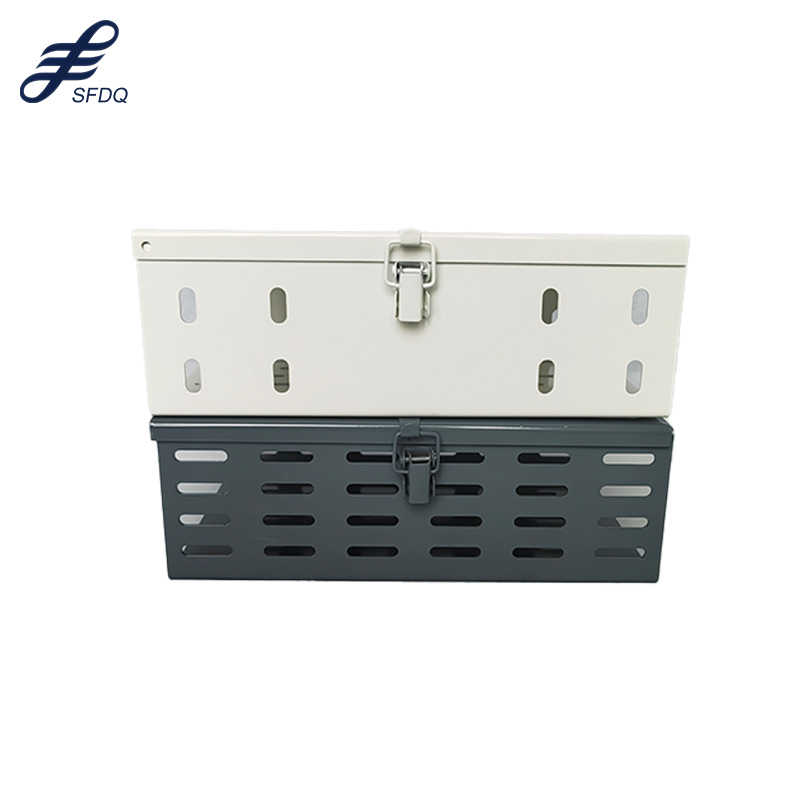
In the intricate world of industrial design, every component serves as a critical link in the chain of operational success. Among these, the cable management system often functions as the unsung hero, ensuring that the "nervous system" of a facility—its power and control wiring—remains protected, organized, and functional. When engineers and procurement specialists for automotive parts plants or metallurgy complexes sit down to specify infrastructure, the debate frequently narrows down to two primary contenders: the Perforated Cable Tray and the Solid Bottom Tray.
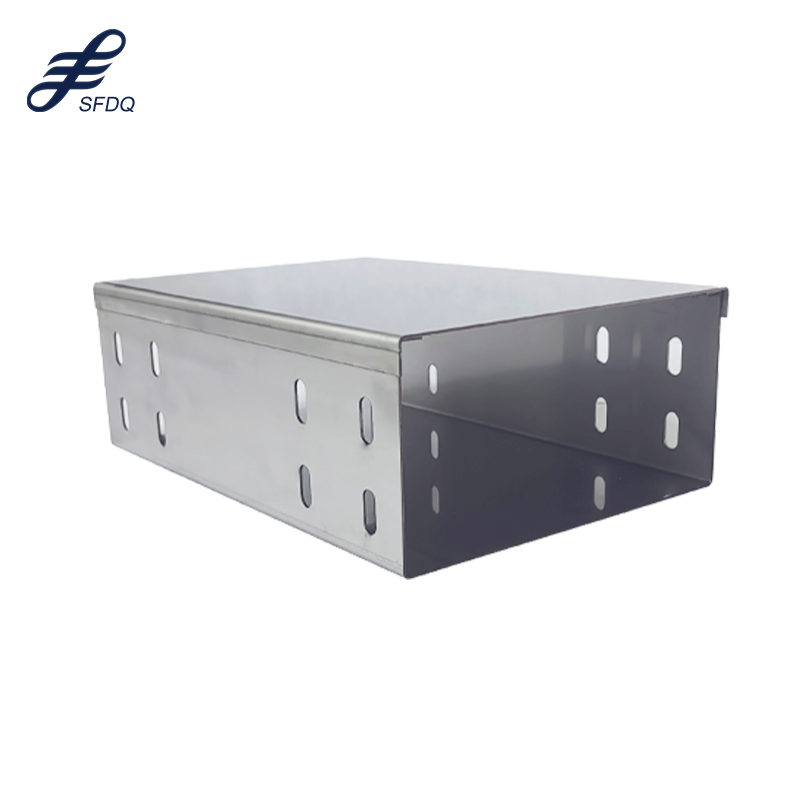
Choosing between these two is not merely a matter of aesthetic preference or price. It is a decision rooted in the physical requirements of the environment, the thermal dynamics of the electrical load, and the specific protection needs of high-value equipment like CNC wire bending machines and circle forming machines. This guide provides an exhaustive comparison of these two systems to help you determine the optimal solution for your industrial application.
Understanding the Core Designs
Before diving into the comparative metrics, it is essential to define what differentiates these two systems at a structural level.
The Perforated Cable Tray (Ventilated Tray)
A perforated cable tray features a series of holes or slots in the bottom and side rails. These openings are engineered to allow for airflow and drainage. Typically manufactured from galvanized steel, aluminum, or stainless steel, perforated trays offer a balanced approach between structural support and open-air ventilation. They are the most common choice for medium-duty power and control cabling across diverse industrial landscapes.
The Solid Bottom Tray (Non-Ventilated Tray)
As the name suggests, a solid bottom tray is a completely enclosed channel on its base and sides, resembling a rectangular trough. It provides a continuous, unbroken surface for the cables. When paired with a solid cover, it essentially transforms into a metal raceway, offering the maximum level of physical shielding available in a tray system. This design is often reserved for sensitive signal cables or environments with extreme external hazards.
Thermal Management and Heat Dissipation
One of the most significant factors in electrical engineering is the management of heat. As electricity flows through a conductor, it generates heat due to resistance. If this heat cannot escape, the temperature of the cable rises, which can lead to insulation breakdown and increased electrical resistance.
The Perforated Advantage
The perforated tray excels in thermal management. The slots in the bottom allow air to circulate freely around each Tray Cable (TC). This natural convection cooling prevents the buildup of "hot spots" within the tray. Because heat can escape, engineers often do not have to "derate" the cables as severely as they would in a closed system. This means you can use the cable's full current-carrying capacity, potentially allowing for smaller, more cost-effective conductor gauges.
The Solid Bottom Constraint
In a solid bottom tray, heat is trapped. There is no path for vertical airflow, and the metal base acts as a heat sink only to a limited extent. In high-power applications, such as feeding a heavy metallurgy smelting furnace or a large motor array, the internal temperature can rise significantly. Consequently, cables in solid bottom trays must often be derated, requiring larger, more expensive copper or aluminum conductors to handle the same load safely.
Protection from Environmental Externalities
While heat is an internal threat, industrial environments present a host of external threats, including dust, moisture, corrosive chemicals, and falling debris.
Solid Bottom: The Shield
In industries like metallurgy or cement production, the air is often thick with abrasive dust, metallic shavings, or slag. Here, the solid bottom tray is the superior choice. Its continuous surface prevents fine particulates from accumulating on the cables. Furthermore, if the facility uses overhead fluid lines, a solid bottom tray (especially with a cover) protects the cables from leaks or accidental spills that could otherwise seep through the holes of a perforated tray and corrode the cable jackets.
Perforated: The Drainage Solution
Perforated trays are often the preferred choice in outdoor environments or areas subject to high humidity. The holes allow moisture and condensation to drain away instantly. In a solid bottom tray, moisture can pool at the bottom, creating a "soaking" effect that can eventually compromise even the most robust TC-ER rated cables. For an automotive parts assembly line where wash-down cycles are frequent, a perforated tray ensures that no liquids remain trapped within the wiring infrastructure.
Electromagnetic Interference (EMI) and RFI Shielding
In the era of the "Smart Factory," signal integrity is as important as power delivery. CNC wire bending machines and automated machinery rely on clean, interference-free communication between sensors and controllers.
Solid Bottom for Sensitive Signals
A solid bottom tray made of steel or aluminum provides an inherent level of EMI and RFI shielding. Because the metal is continuous, it acts as a Faraday cage, dampening the "noise" generated by nearby high-voltage equipment or motors. For low-voltage data lines and sensitive instrumentation cables, the solid bottom tray provides a much cleaner signal environment than a perforated tray.
Perforated Trays and Interference
While perforated trays provide some shielding, the openings in the metal allow for a certain degree of electromagnetic leakage. In a dense environment where power and data cables must run in parallel, a perforated tray may require the use of shielded cables or additional separation distances to maintain signal integrity, which can increase the overall project cost.
Load Capacity and Structural Rigidity
Both tray types are engineered to meet rigorous standards like NEMA VE 1, but their structural profiles lend themselves to different loading scenarios.
Structural Comparison
Solid bottom trays are generally more rigid across their width because of the continuous metal plate. This makes them excellent for supporting very small, flexible cables that might otherwise sag through the openings of a perforated tray. However, perforated trays are often lighter and easier to handle during installation. Their "ribbed" or corrugated designs can provide surprising longitudinal strength, allowing them to span significant distances between supports in a machinery hall.
Installation and Maintenance Logistics
Labor is a massive component of any infrastructure budget. The ease with which a system can be installed and maintained directly impacts the "Total Installed Cost."
Perforated Efficiency
Perforated trays are significantly easier to install in complex layouts. The holes serve as convenient points for securing cable ties, allowing installers to organize the "spaghetti" of wires with precision. Additionally, when a cable needs to drop out of the tray to reach a specific circle forming machine, it can often be routed directly through one of the existing perforations.
Solid Bottom Maintenance
Maintenance in a solid bottom tray can be more challenging. Dust and debris that do manage to enter the tray have no way to fall out, requiring manual cleaning during plant shutdowns. Furthermore, dropping a cable out of a solid bottom tray requires the installer to cut a custom hole and install a protective grommet to prevent the tray’s edge from cutting the cable insulation—a time-consuming process that increases the risk of error.
Industry-Specific Recommendations
| Industry Sector | Primary Choice | Key Reason |
| Automotive Parts | Perforated | Ventilation for high-cycle robotic cables and easy "drop-outs" to equipment. |
| Metallurgy | Solid Bottom | Protection from heavy dust, slag, and falling metallic particulates. |
| CNC Machining | Perforated (Power) | Cooling for high-torque motors and ease of reconfiguring machine layouts. |
| Data/Control Centers | Solid Bottom | Superior EMI shielding and support for high densities of small-diameter wires. |
Cost Considerations: The Long View
On a purely material basis, solid bottom trays often carry a higher price tag because they require more raw metal per linear foot than perforated versions. However, the true cost must account for the life of the facility.
Initial Cost: Perforated is generally cheaper to buy and faster to install.
Operational Cost: If a solid bottom tray allows you to use non-shielded cables in a high-EMI environment, it might save money overall. Conversely, if a perforated tray prevents the need to derate cables, the savings on copper can be substantial.
Maintenance Cost: Solid bottom trays may require more frequent internal cleaning in dirty environments, whereas perforated trays are largely self-cleaning regarding dust.
FAQ: Essential Questions for Procurement
Q: Can I mix perforated and solid bottom trays in the same facility?
A: Yes, and it is often recommended. You might use perforated trays for the main power headers where heat is an issue and switch to solid bottom trays for the "last mile" of sensitive signal cabling near the control cabinets of your machinery.
Q: Do solid bottom trays require more grounding than perforated ones?
A: Both must be properly grounded according to NEC standards. However, since solid bottom trays are often used for shielding, ensuring a high-integrity, low-impedance ground path is even more critical to maintaining their EMI-blocking performance.
Q: Which is better for fire protection?
A: Solid bottom trays with covers offer a higher degree of fire protection for the cables themselves, acting as a physical barrier against external flames for a longer period than perforated trays.
Conclusion: Choosing the Right Path
The choice between a perforated cable tray and a solid bottom tray is a classic engineering trade-off. If your priority is heat dissipation, ease of installation, and airflow, the perforated tray is the clear winner. This makes it the standard for the vast majority of automotive and general machinery applications.
However, if your facility operates in the harsh, dust-laden world of metallurgy, or if you are managing ultra-sensitive data that requires maximum EMI shielding, the solid bottom tray is an indispensable investment. By carefully weighing the environmental stressors of your specific "GEO" against the technical requirements of your electrical load, you can ensure that your cable management system provides a robust, safe, and efficient foundation for your industrial future.